hoda rahimian
RxPost Case Study: A Product Design Journey
Project Overview
RxPost is an inventory sharing platform tailored to independent pharmacies. The platform is designed to assist these pharmacies in optimizing their unused inventory, thereby enabling them to enhance their revenue while dedicating more time to serving their local communities. Having successfully established itself in the market as a web application for a year, RxPost now seeks to enhance its user experience & streamline operational workflows.
Industry
Healthcare
Project Duration
The project is scheduled for a 45-day duration, spanning from April to May | 2023.
Kick-off
We initiated the project by engaging with stakeholders to gather insights into the project's objectives & business requirements. While the initial feedback from stakeholders provided a foundational understanding, we recognized the importance of delving deeper into the needs of end-users.
Available Data
Our research process began by leveraging the data collected by the marketing team over the years. This dataset encompassed valuable information derived from sources such as Google Analytics, Hotjar, & social media analytics. Hotjar, in particular, played a pivotal role in understanding user behavior on the web application. We meticulously collated this data onto a research board using FigJam, facilitating its synthesis into an affinity diagram.
Research Methodology
Heuristic Evaluation
We initiated our research with a comprehensive heuristic evaluation, thoroughly scrutinizing various application flows. Additionally, as there was no initial design documentation available, we reconstructed the existing software flows.
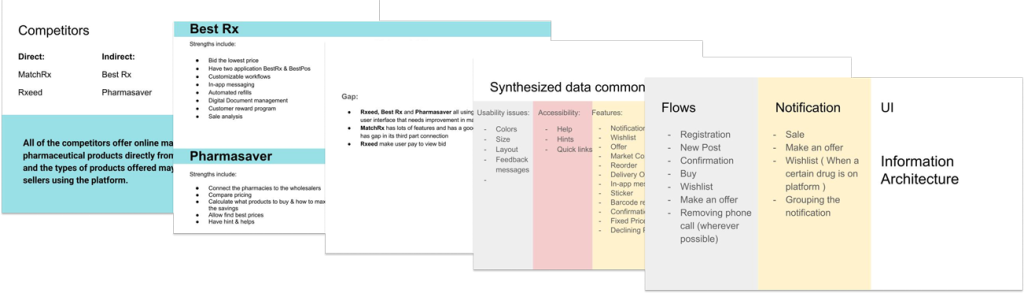
Competitors Audit
In collaboration with the stakeholders, we identified a set of market competitors. We further conducted our research, expanding the list to encompass additional competitors. This enabled us to create detailed audit sheets, the flows, interface, & features of both direct & indirect competitors. A comprehensive report was then presented to the stakeholders.
Interview with Customers
We engaged with four RxPost customers through interviews, actively identifying pain points & requirements. These interviews were meticulously documented, & an empathy map was constructed, derived from user feedback on the application.
Competetive Audit Report presentation
User Personas
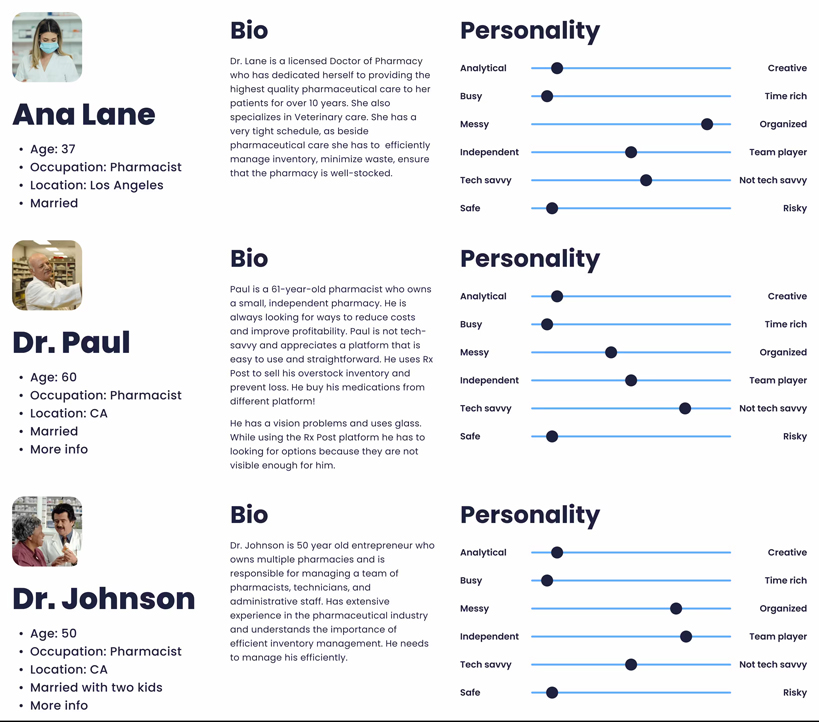
Four distinct personas were crafted, each representing a specific user group interacting with the platform. These personas served as the bedrock for design decisions throughout the project.
User Journey Map
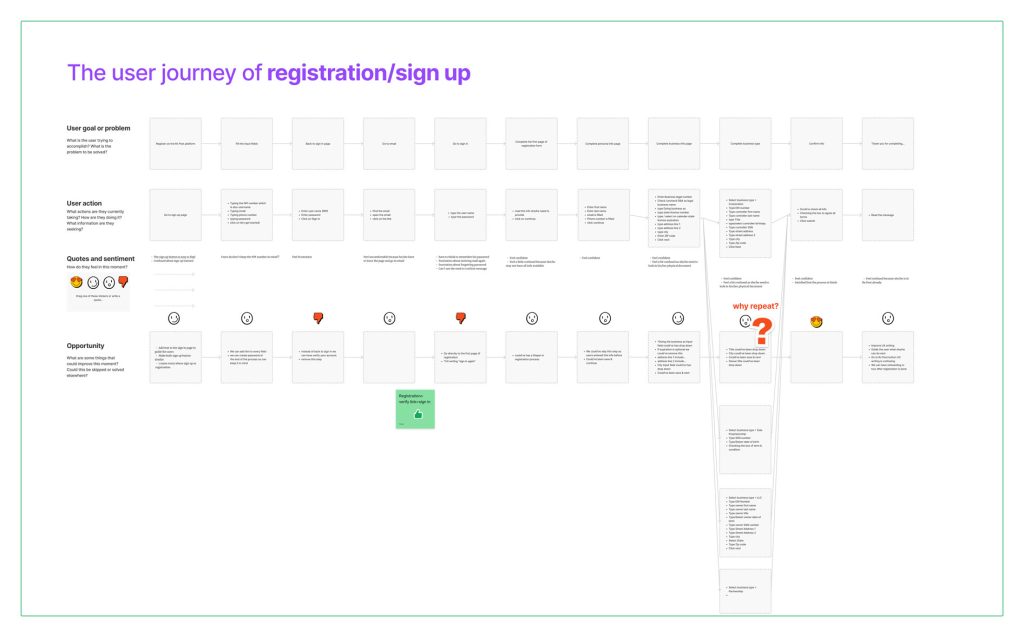
To enhance the overall user experience, we created detailed user journey maps for all application flows. These maps enabled us to pinpoint errors & areas requiring improvement in every step of the user's journey toward their end goal. Insights gleaned from prior research phases guided us in refining the user flow to better align with user needs.
User Flows
Following the creation of the user journey maps, we streamlined the user flows by identifying opportunities to minimize complexity & optimize efficiency.

Information Architecture
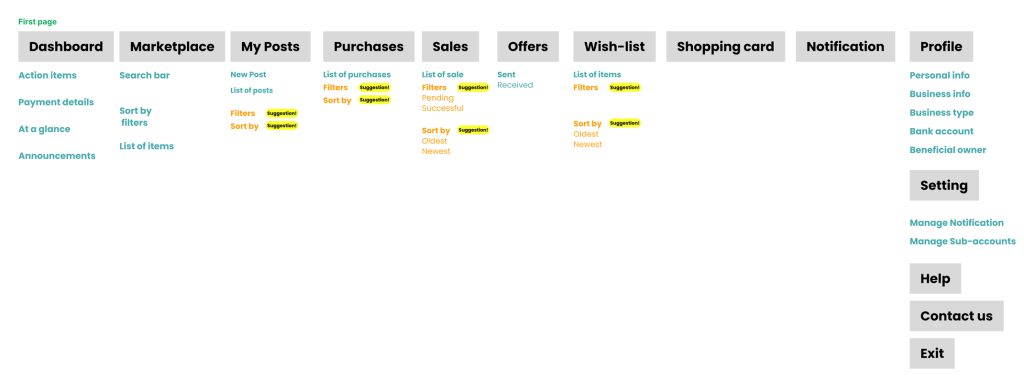
We overhauled the Information Architecture to better serve our primary demographic: pharmacy owners. Recognizing that many users are older & manage age-related visual impairments or limited technical experience, we prioritized high-visibility navigation. By streamlining the menu structure & reducing cognitive load, we ensured that even less tech-savvy users could locate critical pages effortlessly, regardless of their familiarity with the platform.
Wireframes
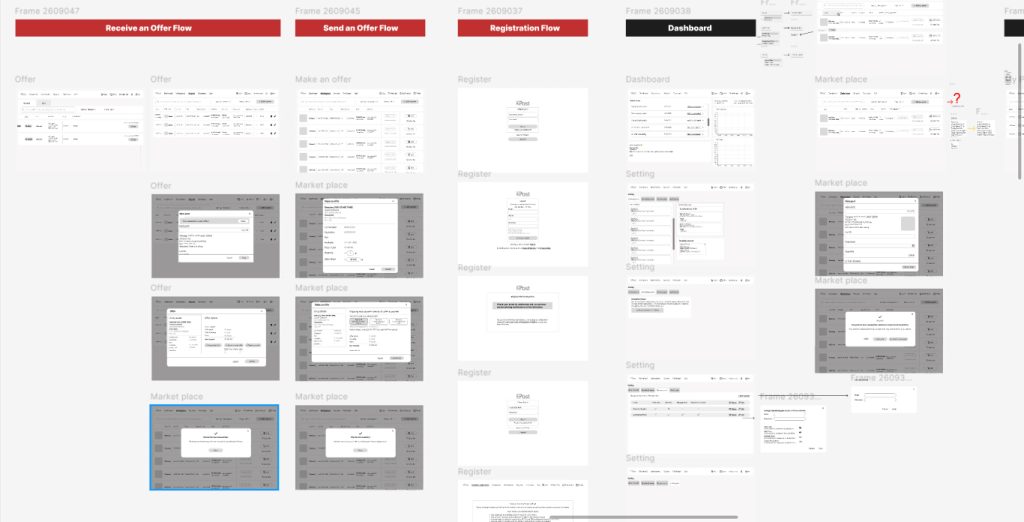
During the wireframing stage, our team engaged in brainstorming sessions to explore diverse design ideas. Wireframes were then shared with stakeholders, & after soliciting user feedback, improvements were implemented in line with this input.
Usabillity Testing
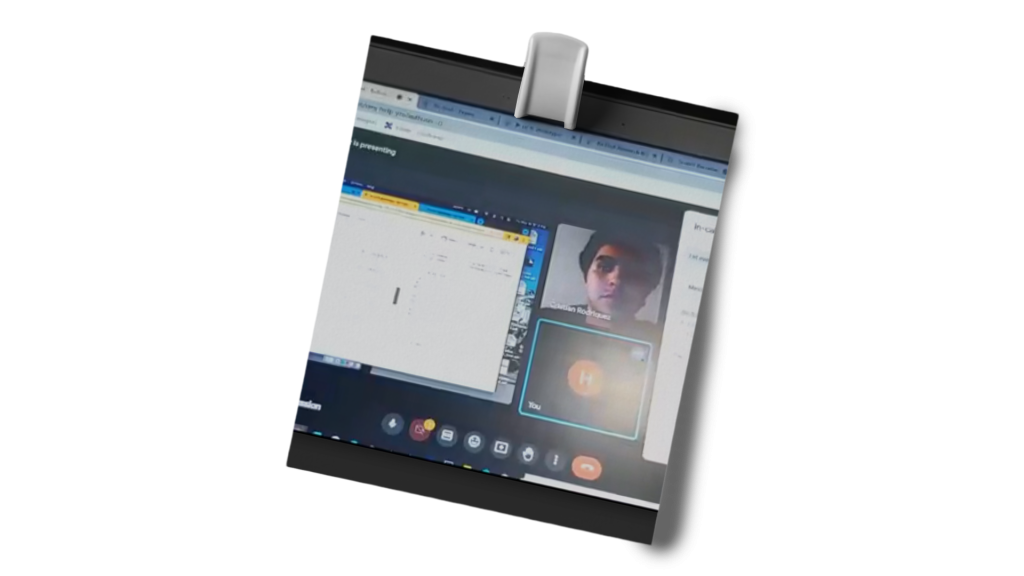
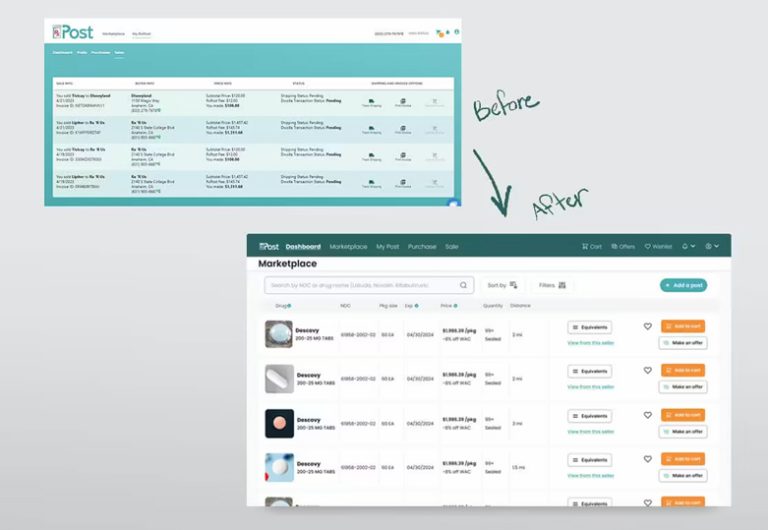
We conducted five usability testing sessions with current & potential RxPost clients, introduced by the company’s CEO. User feedback was systematically collected, analyzed, & incorporated into the design. This process enabled continuous iteration & improvement based on real user insights.
Develop
Handoff to Developers
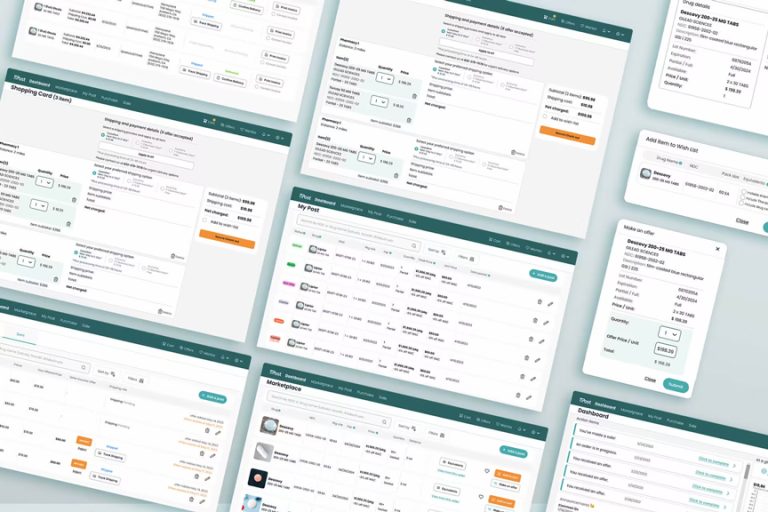
To facilitate a seamless transition from design to development, we compiled a comprehensive design file in Figma. This file encompassed a range of pages, from wireframes to the final prototype. Additionally, we created separate pages to illustrate the flow & included a UI design kit & components. Collaborative meetings with developers were instrumental in aligning the design with their specific requirements, ensuring clarity & ease of comprehension.
Future Development Ideas
During the final project handoff, we engaged in discussions regarding potential future enhancements. One such idea involved exploring the integration of artificial intelligence to further enhance the customer experience on the platform.
hoda rahimian is proudly powered by WordPress