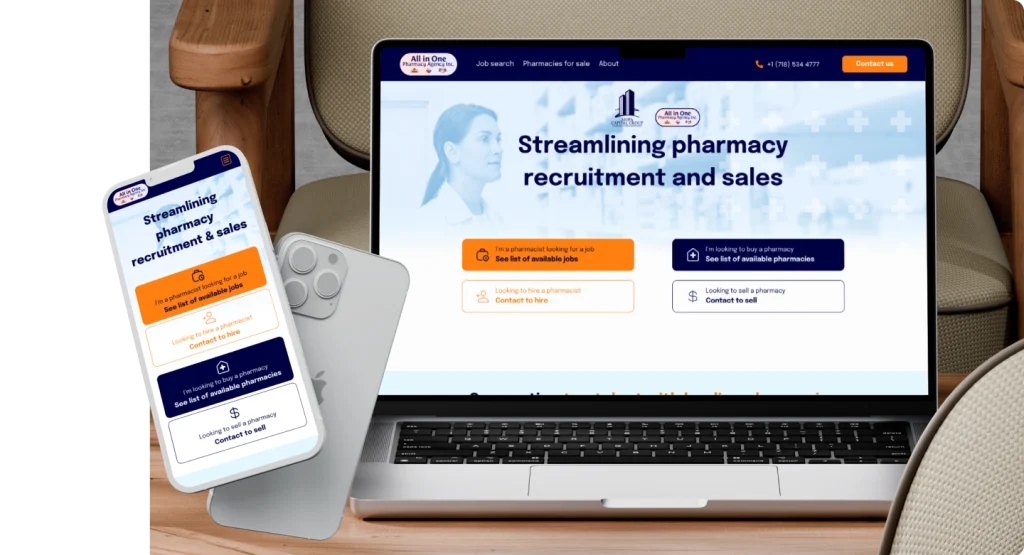
AIOPA Design Case Study: Connecting Pharmacists & Pharmacies

The AIOPA project aimed to address critical needs within the pharmaceutical sector by creating a comprehensive platform. This platform serves two primary functions:

  1. – connecting pharmacists with relevant job opportunities 
  2. – facilitating the buying & selling of pharmacies.
The core objective was to streamline these complex processes, enhance user experience, & create an efficient lead generation & management system for the business.

Problem Statement

How might we revolutionize the pharmacy business lifecycle—from staffing to acquisition?

This project addressed a multi-layered industry crisis: a critical pharmacist shortage, a convoluted job market, & opaque business transactions. My role was to transform these inefficiencies into a streamlined digital ecosystem that empowers pharmacy owners to hire faster, sell securely, & manage their internal operations with data-informed precision.

Project Goal

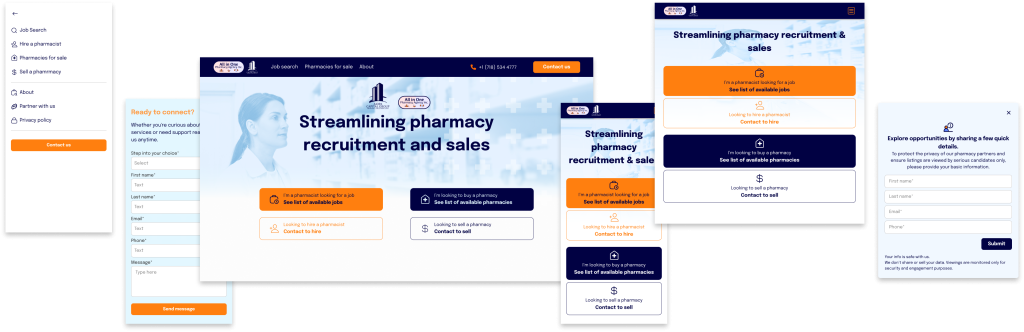
To design & develop a user-centric website that efficiently connects pharmacists with job opportunities, & pharmacy owners with suitable buyers or sellers, while establishing a robust lead generation & management system.

Core Users

The platform was designed to cater to four distinct user groups:

The Design Process

The AIOPA project followed a structured design process, emphasizing user research, iterative development, & stakeholder collaboration.

1. User Research & Stakeholder Interviews

The initial phase focused on gaining a deep understanding of the problem space & user needs.

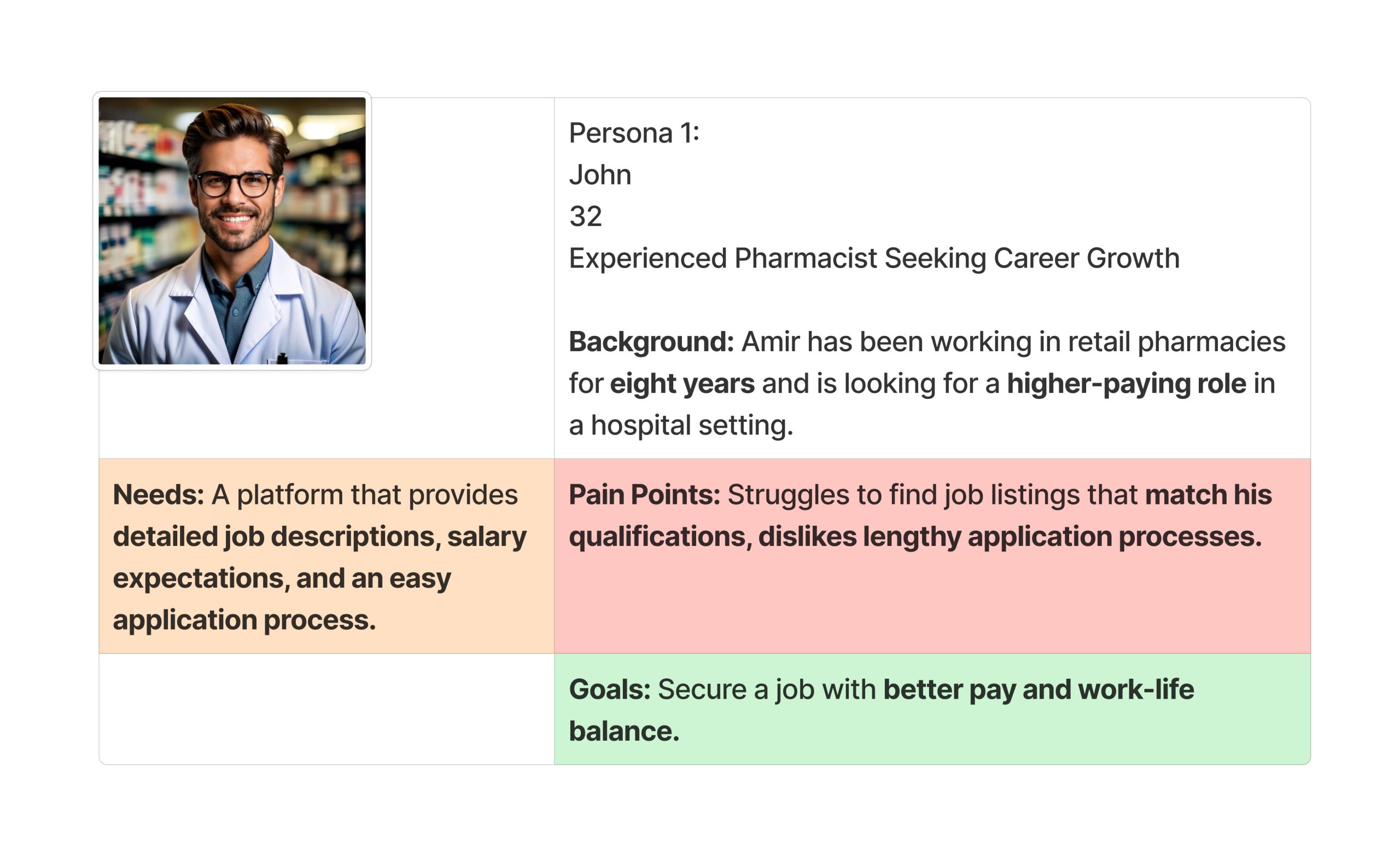
User Persona

Pharmacist Looking for a Job

Struggled with finding matching job listings, lengthy applications, or navigating the job market as a new graduate. Goals included securing better pay, work-life balance, or landing a first job.

Pharmacy Looking to Hire

Faced high turnover, unreliable applicants, & inefficient hiring processes. Goals included quickly hiring qualified pharmacists & streamlining recruitment.
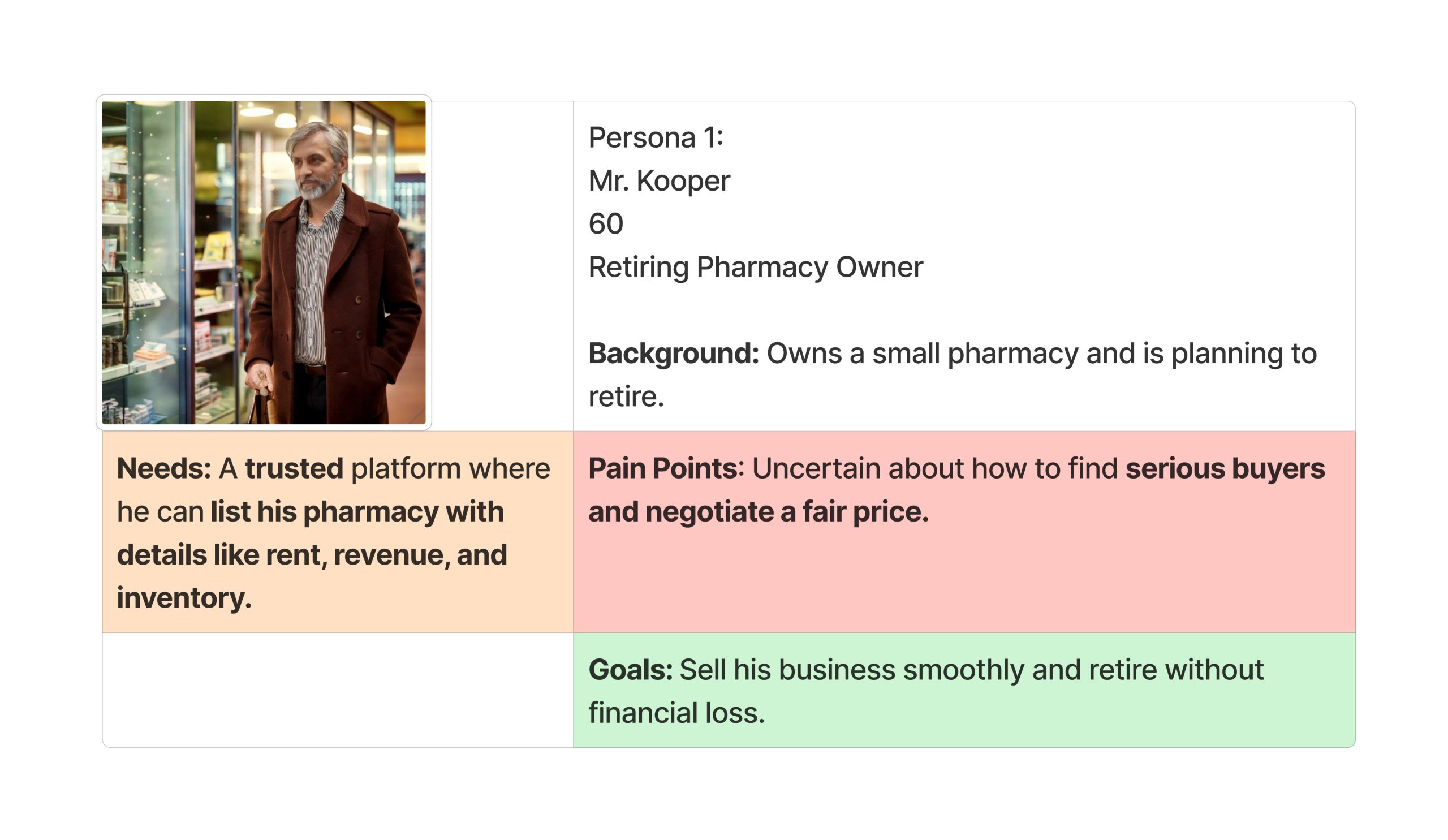
Pharmacy Looking to Sell

Concerned about finding serious buyers, getting a fair price, or needing a fast sale. Goals included smooth transitions & fair deals.
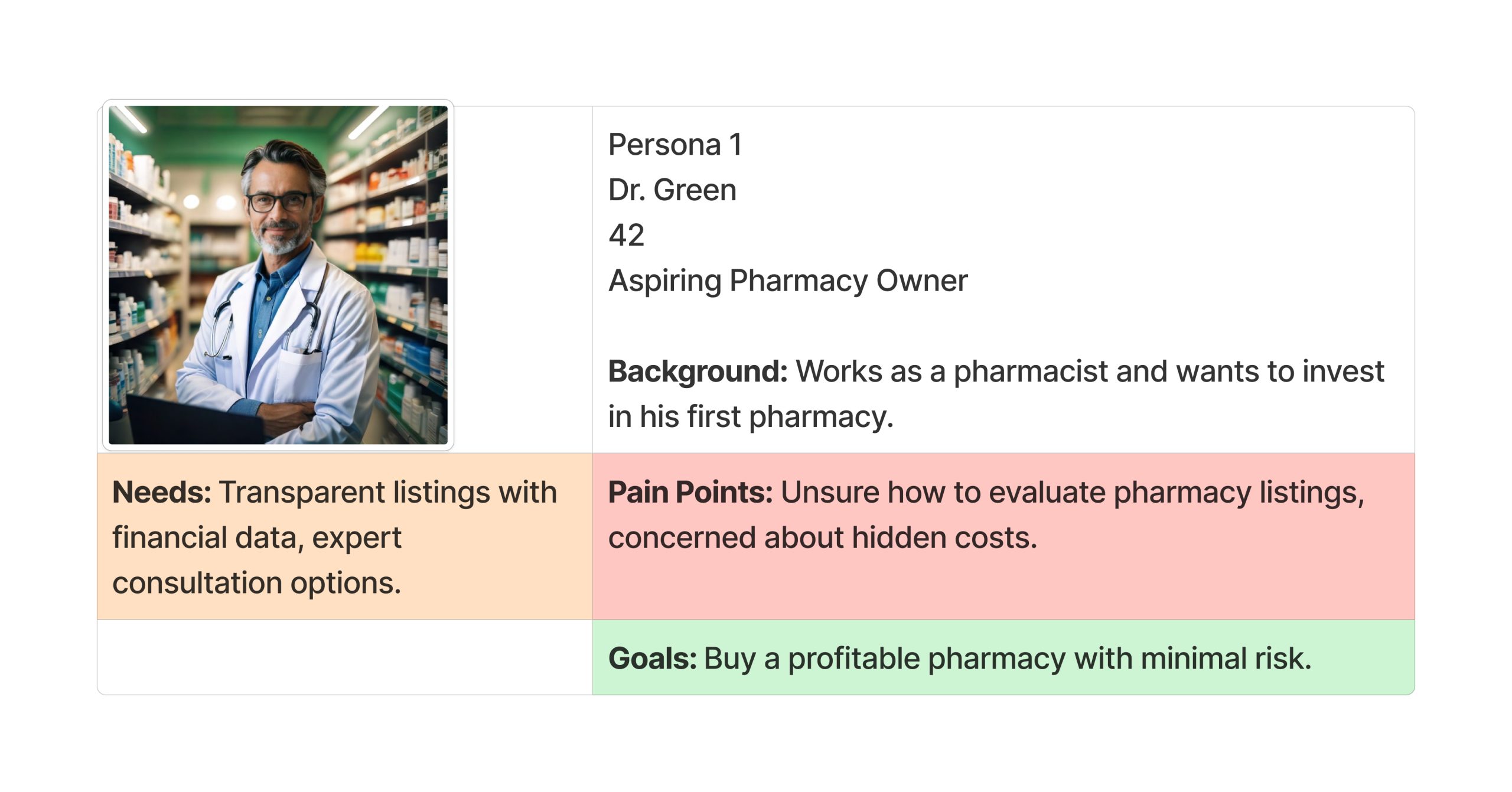
Pharmacist Looking to Buy

Worried about evaluating listings, hidden costs, or needing verified information for strategic purchases. Goals included buying profitable pharmacies with minimal risk.
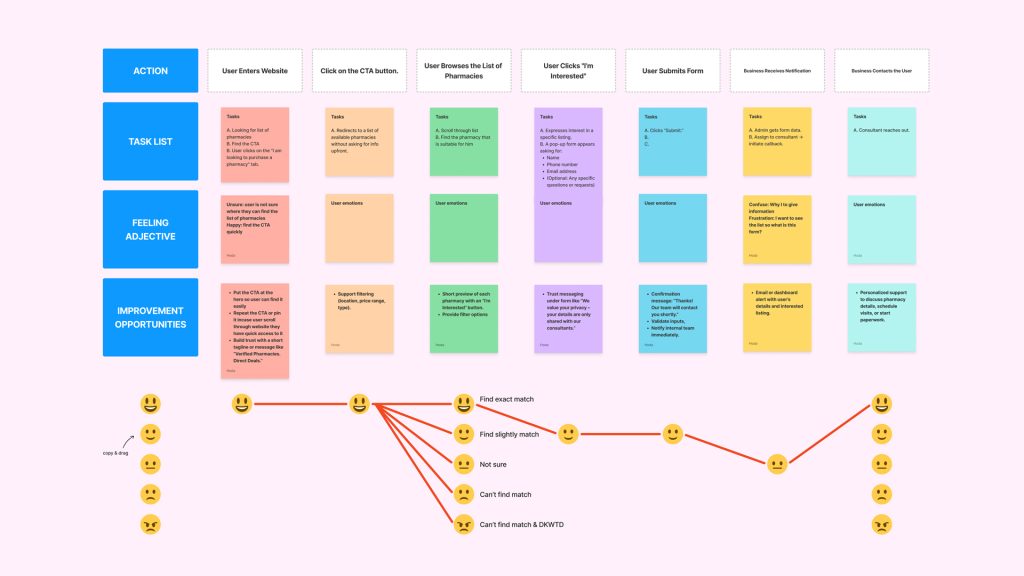
2. Information Architecture & User Flows

Mapping the Experience

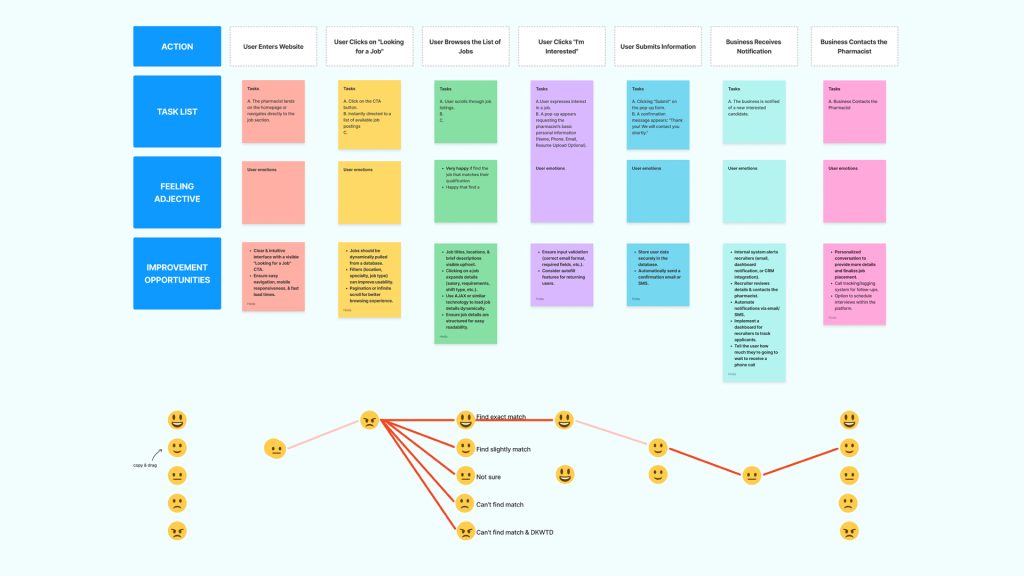
To move beyond static personas, we developed comprehensive User Journey Maps. This helped the team & stakeholders visualize the pharmacist’s frustrations & the owner’s anxieties. Our collaborative mapping sessions acted as a blueprint, ensuring we designed solutions that solved specific pain points rather than just adding features.

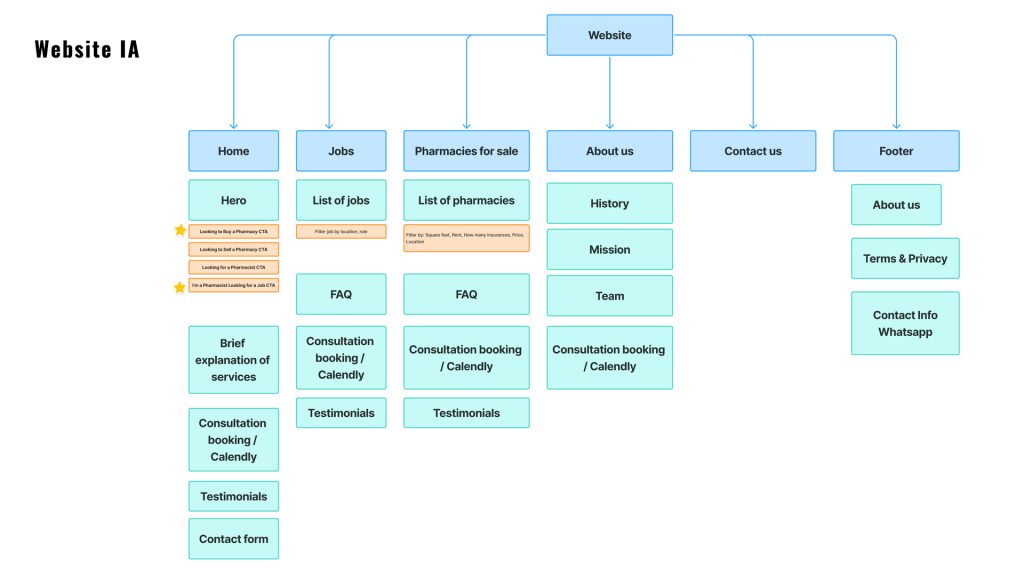
Information Architecture & Systems Thinking

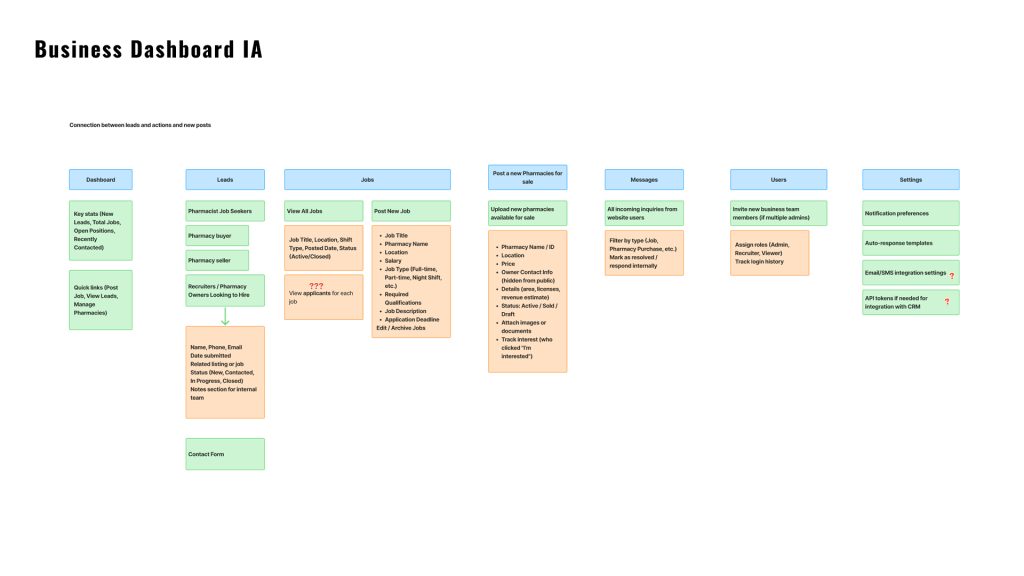
We architected a scalable site map to bridge the gap between public users & internal operations. In close collaboration with the engineering team, I led the parallel-tracking of the public website & internal dashboard designs.

This simultaneous approach was critical for two reasons:

  • Technical Interdependence: The front-end and back-end shared a unified data structure; developer input ensured our IA was technically feasible from day one.

  • Time Efficiency: To meet strict time constraints, we bypassed linear workflows, allowing design & development logic to be built in tandem.

User Flow Engineering

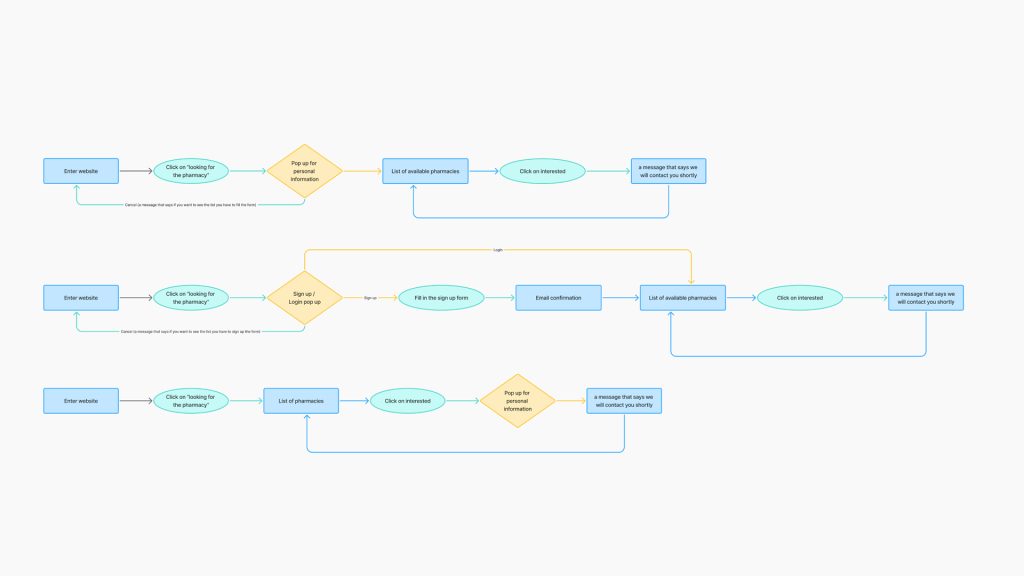
We mapped the end-to-end user journey in close collaboration with the business owners. This ensured that every flow not only served the user but also fulfilled specific operational requirements & business logic. By integrating stakeholder feedback early, we transformed complex internal processes into intuitive, high-conversion pathways for both pharmacists & buyers.

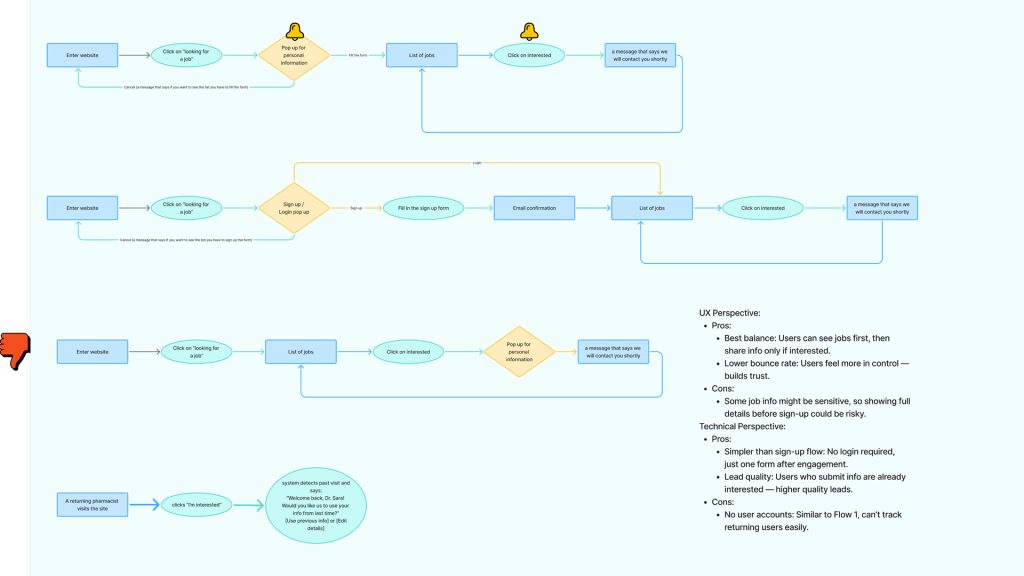
Lead Generation vs. User Experience

Flows considered trade-offs between immediately collecting user information (for lead generation) & allowing users to browse first (for better UX; lower bounce rates). The decision leaned towards allowing some initial browsing for jobs before requiring information, but emphasizing lead capture for all key actions. A “system detects past visit” feature was also proposed to pre-fill information for returning users.

3. Key Features & Design Decisions

Design decisions were heavily influenced by stakeholder feedback & user needs, prioritizing lead generation & operational efficiency.

Lead Generation Focus:

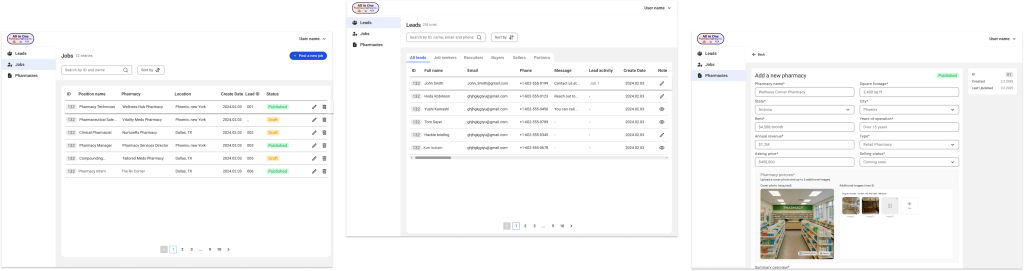
Business Dashboard:

An internal dashboard was designed to provide the client with a centralized system for managing operations:

4. Challenges & Solutions

Throughout the project, design decisions directly addressed identified challenges:

Challenge: Shortage of Pharmacists
Challenge: Inefficient Inquiry Handling
Challenge: Lead Quality & Management
Challenge: Balancing UX with Lead Capture

Conclusion

The AIOPA project successfully leveraged a user-centered design approach to build a robust & intuitive platform. By meticulously conducting stakeholder interviews, developing detailed personas, mapping user journeys, & iterating on information architecture & features, the project delivered a solution that not only addresses critical market needs but also provides the business with powerful tools for lead generation & operational management. The platform is poised to significantly streamline the processes of pharmacist recruitment & pharmacy transactions, contributing to greater efficiency & connectivity within the industry.